


Bathroom Design in 2026: What I’m Seeing, What’s Shifting, and Why It Actually Matters

For a long time, bathrooms were designed to be clean, efficient, and neutral. And on paper, that made sense.
But lately, I’m seeing a very different priority show up in client conversations – less “what’s popular?” and more “what actually works for us.” Less about perfection, more about comfort.
When I was recently asked to contribute to a 2026 bathroom trends article alongside designers across the industry, what stood out to me wasn’t the trends themselves. It was how closely the data mirrored what I’ve been seeing unfold in real homes.
Because here’s the thing, bathrooms are changing, but not because Pinterest decided something new was in. They’re changing because people are tired. Overstimulated. Busy. Caring for kids, parents, themselves. And they want their homes to support them instead of asking more from them.
So let’s talk about what’s actually shifting in 2026, what I’m seeing on the ground, and how I’m helping clients make decisions that feel good now and still make sense years down the road.
We’re Officially Moving On from the Cold, Sterile Bathroom Era
One of the biggest takeaways from the report was this:
75% of design professionals agree that all-white and all-gray bathrooms are on their way out.
And honestly? I’m not surprised.
For a long time, “spa-like” got translated into bright white, cool gray, sharp contrast, very clean. And while that looks great in photos, it doesn’t always feel great at 6:30am or after a long day.
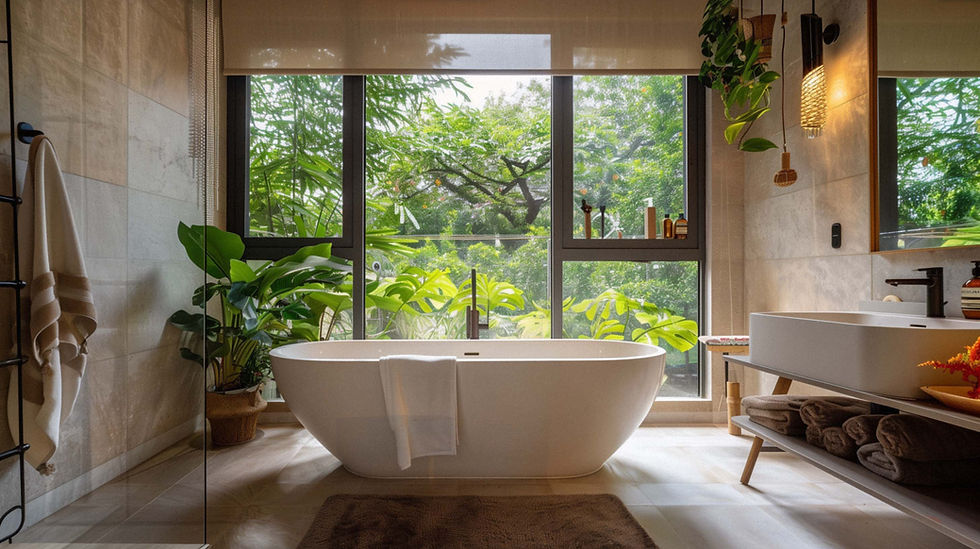
What I’m seeing now is a quiet craving for warmth.
Not trendy warmth. Not bold-for-the-sake-of-bold. But colors and materials that feel grounding. Familiar. Easy on the nervous system.
Think:
Soft, earthy neutrals
Warm whites that don’t feel icy
Clay, sand, mushroom, olive
Wood tones you can actually see the grain in
Clients aren’t asking for sharp contrast and drama, they’re asking for comfort. They want a bathroom that feels like a soft landing, not a showroom.
And that’s a shift I’m very happy to lean into.

Natural Light Isn’t a Bonus Anymore, It’s the Whole Point
Another stat that really stood out:
62% of experts say homeowners are prioritizing natural light in bathroom design.
Bathrooms used to be treated like interior boxes – small windows, overhead lighting doing all the work. But people are realizing that how a space is lit changes how they feel in it.
In practice, this looks like:
Rethinking window placement (not just size)
Using frosted or textured glass for privacy without blocking light
Layering lighting so the room works in the morning and at night
I always ask clients to think about the bathroom at different moments of the day.
How does it feel first thing in the morning?
How does it feel when you’re winding down?
Good bathroom lighting supports your rhythm. And once you experience that, it’s hard to go back.
Showers Are Becoming the True Luxury Moment
One of the clearest shifts I’m seeing in bathroom design right now is showers becoming an experience.
This isn’t about chasing a specific look, it’s about how the space feels when you actually use it. A well-designed shower now prioritizes ease, comfort, and a sense of calm.
What that often looks like in practice:
Walk-in, open showers that feel spacious rather than boxed in
Multiple shower heads so routines feel easier and more fluid
Heated floors to soften the transition out of the shower
Optional steam or smart controls that turn a daily habit into a reset
Uncluttered surroundings that let your mind slow down
What I love about this shift is how it quietly redefines luxury. The features that feel indulgent are the same ones that make the space easier to use, now and years from now.

Wood Is Back (and It Never Should’ve Left)
Another data point I quietly cheered for:
51% of experts identify natural wood tones as the top vanity trend.
Yes. Please. More of this.
Wood does something really important in bathrooms, it softens the space. It balances stone. It makes everything feel more human.
Clients are gravitating toward:
Wood vanities with visible grain
Fluted or curved details
Mixed materials that don’t feel overly “matched”
This goes hand in hand with a bigger move toward tactile design – surfaces that feel good to touch, materials that age gracefully, spaces that feel lived in rather than staged.
Perfection is out. Character is in.
Different Generations, Same Underlying Need
One of the most interesting parts of the report was the generational breakdown, and it mirrors what I’m seeing with clients and in conversations in my DMs.
Baby Boomers are driving accessibility and ease of maintenance
Gen X is pushing for higher-end finishes and spa-like features
Millennials are leading with smart tech and wellness
Gen Z is asking for self-expression and personality
And here’s the thing, these priorities actually work together really well.
A curbless shower with good lighting, smart controls, and beautiful materials serves everyone. A minimalist layout with warmth appeals across generations.
The best bathrooms right now aren’t designed for one stage of life, they’re designed with flexibility in mind.

Wellness Isn’t a Trend, It’s the Baseline
One of the reasons I was genuinely excited to be part of this report is because it reflects a shift I care a lot about: homes that support how people actually live and feel.
Bathrooms are finally getting the wellness investment they deserve.
That shows up in:
Heated floors (54% of experts say they’re sticking around)
Better air quality and ventilation
Non-toxic materials and finishes
Biophilic elements that connect us to nature
This isn’t about indulgence. It’s about longevity – physical, emotional, environmental.
And it’s why I always remind clients: trends are not the end all be all. If a decision supports your daily routines and future needs, it’s probably the right one.
What We’re Gently Letting Go Of
As design priorities shift, some things are naturally falling away.
According to the report:
All-white and all-gray bathrooms are fading
Vessel sinks and tile countertops are declining
Faux wood-look tile is losing favor
Matte black hardware is cooling off
Most of these share a common issue - they looked good, but they didn’t always function well or age gracefully.
Design in 2026 feels less about making a statement and more about creating ease.
What This Means If You’re Planning a Remodel
If you’re thinking about a bathroom remodel, whether it’s this year or down the road, here’s what I’d keep in mind:
Design for how you want to feel, not just how you want it to photograph.
Ask yourself:
Does this material feel good to touch?
Will this layout still work for me in 10 or 15 years?
Does this space calm me down, or add friction to my day?
The best bathrooms I’m designing right now aren’t trendy, they’re timeless because they’re thoughtful.
My Takeaway
At the end of the day, this shift isn’t really about trends. It’s about designing spaces that feel good to live in.
Bathrooms in 2026 are warmer, calmer, and more supportive.And honestly, that mirrors what a lot of people are craving in their lives right now.
If you’ve been sensing that something in your space isn’t quite working anymore but you can’t put your finger on it, you’re not alone.
That’s usually where the best design conversations begin.
Want to be notified when a new blog is published? Sign up here!
Looking for more guidance on your next project? Schedule here!


Comments